FlashForward (2009)
9 places · 15 unverified candidates.
In the work itself
Filmed here, set here, or recorded here.
John Ferraro Building
Exact pointFlashForward was filmed at John Ferraro Building.
Where this came fromLos Angeles City Hall
Exact pointFlashForward was filmed at Los Angeles City Hall.
Where this came fromBradbury Building
Exact pointFlashForward was filmed at Bradbury Building.
Where this came fromFigueroa at Wilshire
Exact pointFlashForward was filmed at Figueroa at Wilshire.
Where this came fromLinda Vista Community Hospital
Exact pointFlashForward was filmed at Linda Vista Community Hospital.
Where this came fromLos Angeles Convention Center
Exact pointFlashForward was filmed at Los Angeles Convention Center.
Where this came fromLos Angeles Union Station
Exact pointFlashForward was filmed at Los Angeles Union Station.
Where this came fromMacArthur Park
Exact pointFlashForward was filmed at MacArthur Park.
Where this came fromMalibu Beach Inn
Exact pointFlashForward was filmed at Malibu Beach Inn.
Where this came from
Candidates, not yet verified
15 places named by a source we have not checked. Each row says who said it and links to where.
Bradbury Building
Source checkedAppears as "Building". Appears in “Let No Man Put Asunder”. The oldest surviving commercial building in downtown was constructed in 1893 for gold-mining millionaire Lewis L. Bradbury by George Wyman & Sumner Hunt. The building's mild Romanesque exterior hides an ornate Victorian court with a massive skylight, wrought iron railings, marble stairs, and caged elevators. After falling into disrepair over the years, the office building was extensively restored in 1991 and in 1996 it became to the LAPD's Internal Affairs division as well as several other government agencies. — recorded for FlashForward by MovieMaps. We have checked the source: wikidata_entity+cited_source. It is still a candidate, not part of our graph.
Where this came fromFigueroa at Wilshire
Source checkedAppears as "Rooftop". Appears in “Revelation Zero: Part 1”. — recorded for FlashForward by MovieMaps. We have checked the source: wikidata_entity+cited_source. It is still a candidate, not part of our graph.
Where this came fromJohn Ferraro Building
Source checkedAppears as "FBI Field Office". The John Ferraro Building was constructed in 1965 to consolidate operations for the Los Angeles Department of Water and Power. It is a 17-story building designed by A.C. Martin & Associates in the Corporation-International Style. The pond surrounding the building is part of building's air conditioning and heating systems, reducing power usage in the summer and allowing the building to be heated without a boiler in the winter. The concrete slabs extending past the windows act as shades to also help keep the building cool. — recorded for FlashForward by MovieMaps. We have checked the source: wikidata_entity+cited_source. It is still a candidate, not part of our graph.
Where this came fromLinda Vista Community Hospital
Source checkedAppears as "Raven River Hospital". Appears in “Goodbye Yellow Brick Road”. Source: IMDb — recorded for FlashForward by MovieMaps. We have checked the source: wikidata_entity+cited_source. It is still a candidate, not part of our graph.
Where this came fromLos Angeles City Hall
Source checkedAppears as "Capitol Building". Appears in “Gimme Some Truth”. The Los Angeles City Hall is a 32-story office building constructed in 192 and was the first dedicated city hall for Los Angeles. The building was designed in an amalgam of styles and kept from deliberately invoking any one in particular. Due to the city charter limiting building heights the tower was the tallest building in Los Angeles until 1964. — recorded for FlashForward by MovieMaps. We have checked the source: wikidata_entity+cited_source. It is still a candidate, not part of our graph.
Where this came fromLos Angeles Convention Center
Source checkedAppears as "LAX". Appears in “137 Sekunden”, “Countdown”, & “Future Shock”. Constructed in 1971 and expanded several times over the years, is a 720,000 square foot events space located in downtown Los Angeles. The distinctive green glass and white steel south annex was designed by architect James Ingo Freed and opened in 1993 to become the main entrance. — recorded for FlashForward by MovieMaps. We have checked the source: wikidata_entity+cited_source. It is still a candidate, not part of our graph.
Where this came fromLos Angeles Union Station
Source checkedAppears in “The Garden of Forking Paths”. Constructed in the 1930s to consolidate several different rail services, this grand terminal was constructed on the ruins of the city's original Chinatown at a cost of $11 million. The station was designed primarily by John & Donald Parkinson in a mishmash of different styles. Across the tracks and connected by an underground tunnel is the Patsaouras Transit Plaza designed by Ehrenkrantz & Eckstut which hosts a number of bus lines as well as the Metro's offices. — recorded for FlashForward by MovieMaps. We have checked the source: wikidata_entity+cited_source. It is still a candidate, not part of our graph.
Where this came fromMacArthur Park
Source checkedAppears in “Black Swan”. Source: IMDb — recorded for FlashForward by MovieMaps. We have checked the source: wikidata_entity+cited_source. It is still a candidate, not part of our graph.
Where this came fromMalibu Beach Inn
Source checkedAppears as "Malibu Hotel". Appears in “Playing Cards with Coyote”. — recorded for FlashForward by MovieMaps. We have checked the source: wikidata_entity+cited_source. It is still a candidate, not part of our graph.
Where this came fromFormer Sixth Street Viaduct
In reviewAppears as "Sixth Street Viaduct". Appears in “Course Correction”. The Sixth Street Viaduct was constructed in 1932 to span the Los Angeles River and became a distinctive feature of Los Angeles. The bridge was designed by architect Louis Hout with a pair of swooping metal arches and Art Deco styling. Due to seismic instability and chemical corrosion of the concrete the bridge was closed in 2016 and subsequently demolished to make way for a new span. — recorded for FlashForward by MovieMaps. Not yet verified by us.
Where this came fromMerry-Go-Round
In reviewAppears as "Carousel". Appears in “Queen Sacrifice”. — recorded for FlashForward by MovieMaps. Not yet verified by us.
Where this came fromPoint Dume & Westward Beach
In reviewAppears as "Point Dume". Appears in “Playing Cards with Coyote”. A small state preserve located at the southernmost point of Malibu is quite popular with rock climbers looking for a relatively easy climb. The promontory is distinctly visible from adjacent Westward Beach which continues northwest up to the more popular Zuma Beach. — recorded for FlashForward by MovieMaps. Not yet verified by us.
Where this came fromSanta Monica Pier
In reviewAppears in “Queen Sacrifice”. The iconic landmark originally began its life as two separate piers with different owners and purposes. The first was the Municipal Pier constructed in 1909 to carry sewer pipes away from the beach. The shorter Pleasure Pier was constructed in 1916 by Charles & Arthur Looff to hold an amusement park. The distinctive entry arch and bridge were constructed to 1938. The pier was acquired by the city in 1974 and saved from demolishment by a community campaign. The pier currently houses the Pacific Park family amusement park with a solar powered Ferris wheel, an arcade, museum, aquarium, merry-go-round, and several restaurants. — recorded for FlashForward by MovieMaps. Not yet verified by us.
Where this came fromSignature Flight Support
In reviewAppears as "Airport". Appears in “Let No Man Put Asunder”. — recorded for FlashForward by MovieMaps. Not yet verified by us.
Where this came fromTinhorn Flats Saloon & Grill
In reviewAppears as "Tinhorn Flats". Appears in “137 Sekunden”. — recorded for FlashForward by MovieMaps. Not yet verified by us.
Where this came from
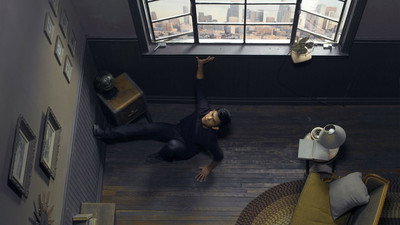
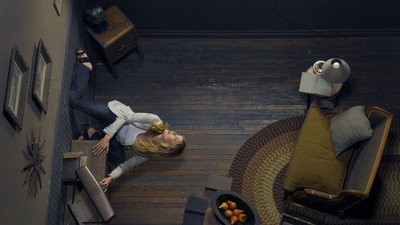
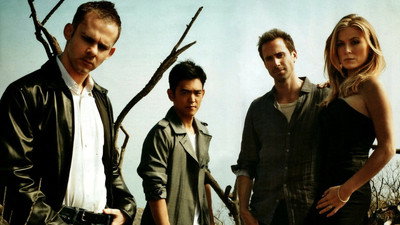
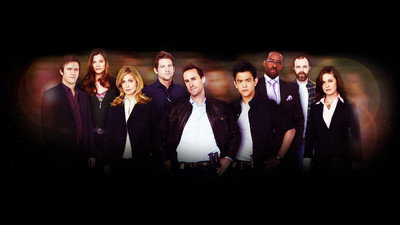
Frames
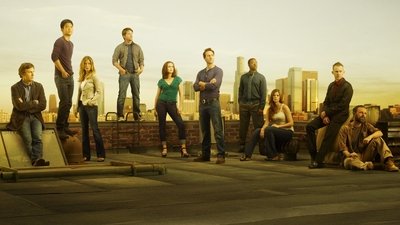
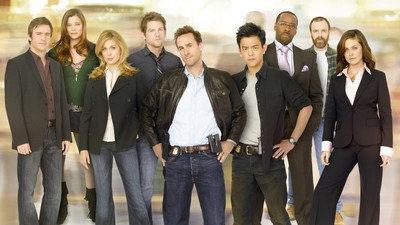
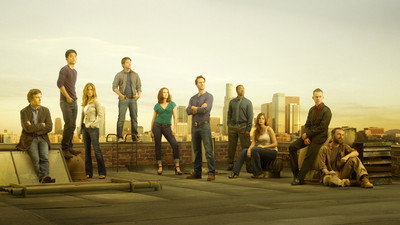
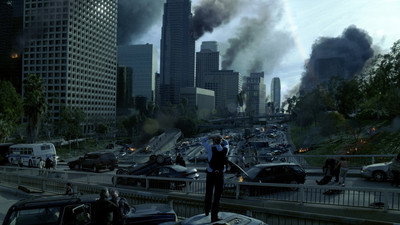
From the film's image gallery — includes promotional art. Not matched to any location.